

THE BIRTH OF THE METAL AIR WATER SYRINGE TIP
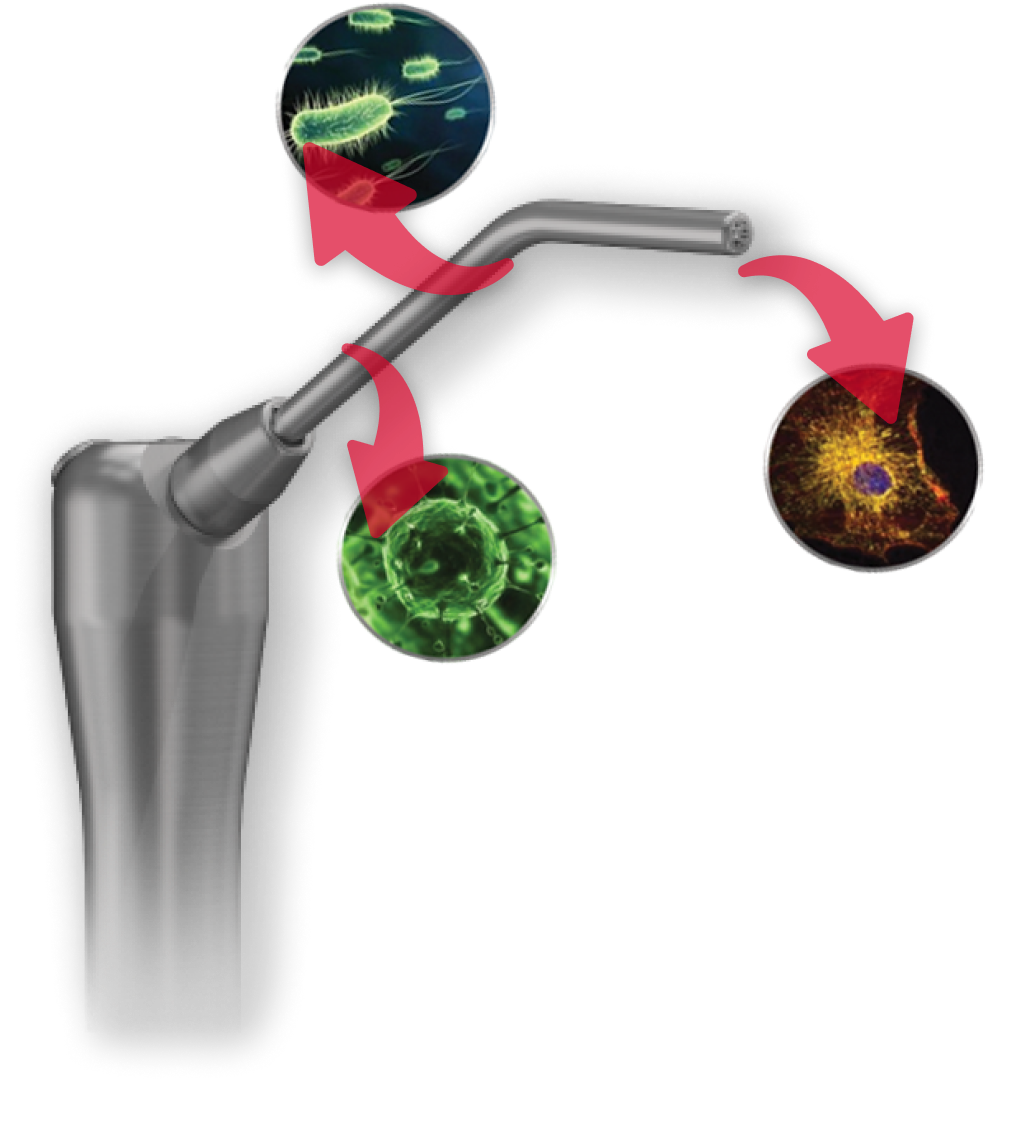
Metal air water syringe tips are born clean and new with smooth channels inside, however, this pristine internal environment changes.
The act of sterilizing is very hostile and exposes the tip to high temperatures and disinfectants, which alter the tip by causing warping, corrosion, and other changes to the materials used to manufacture these tips. Metal air water syringe tips that have been re-processed many times often show visible signs of deterioration including discoloration and distortion.
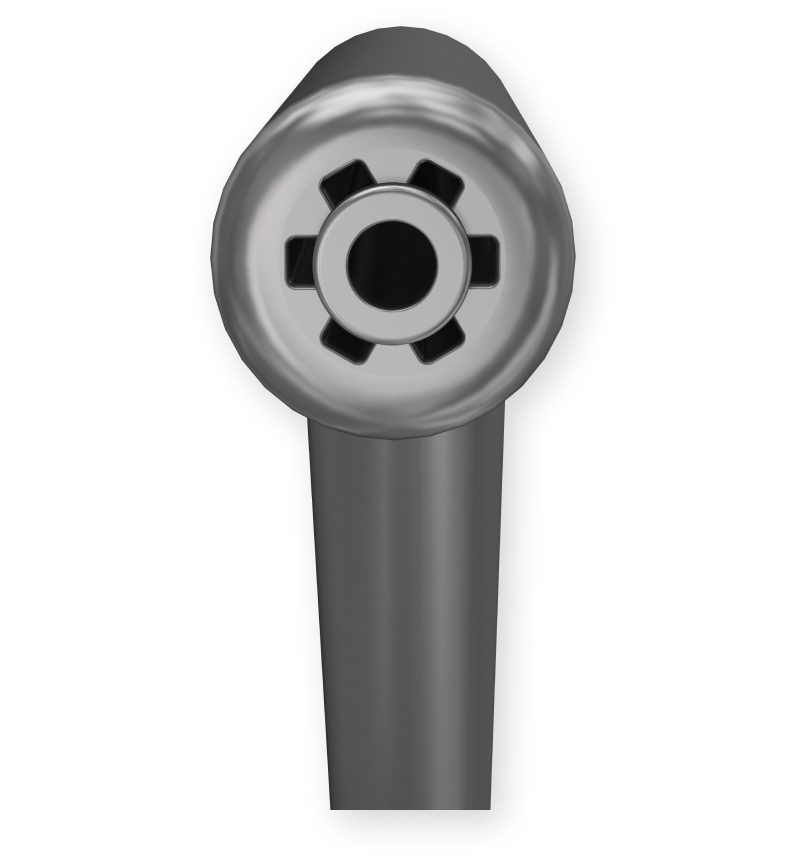
This corrosive process creates a different environment inside the tip making it vulnerable to the collection of debris. An older tip and its micro-lumens can have pits, fissures, and other defects where bioburden is deposited.
REFLUX EFFECT
Also known as aspiration or "suck-back".
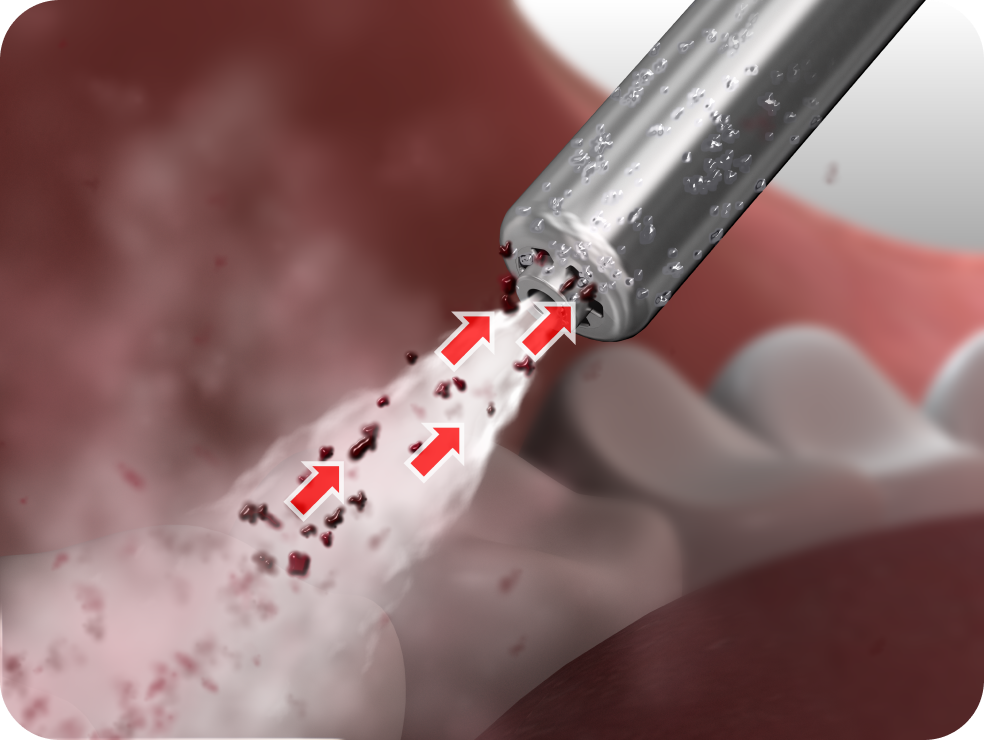
Bioburden enters metal air water syringe tips in several ways. It is important to remember that blood and other potentially infectious bodily fluids can be aerosolized when metal air water syringe tips are used to treat patients (hence the common use of face shields and barrier films today). Negative water pressure is generated in most air water syringes when the buttons are released to close valves inside the syringe. The physics of this action cause suck-back (reflux) into the metal air water syringe tips.
A quarter inch of blood, saliva, and tissue gets sucked into metal air water syringe tips.
ULTRASONIC EFFECT
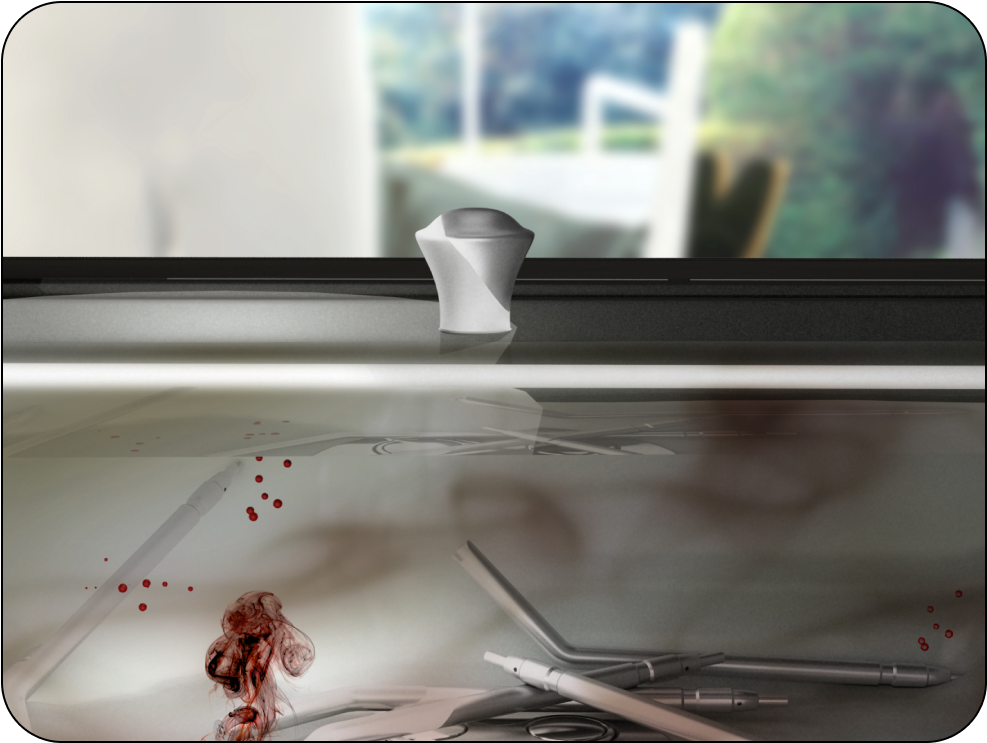
Metal air water syringe tips are then placed into the ultrasonic solution. The ultrasonic fluid is not cleaned as often as it should, sometimes only once or twice a day!
A common practice in the sterilization process is to pre-clean instruments by placing them inside an ultrasonic bath before autoclaving. The disgusting fluid inside the ultrasonic machine is probably the most noxious area in a dental clinic. The ultrasonic is full of blood, saliva, bacteria, and other bioburden from all the patients that have had a treatment that day. This device is good at cleaning instruments on the outside; however, at the same time it introduces the contaminated fluid into the micro-lumens of metal air water syringe tips.
AUTOCLAVE EFFECT
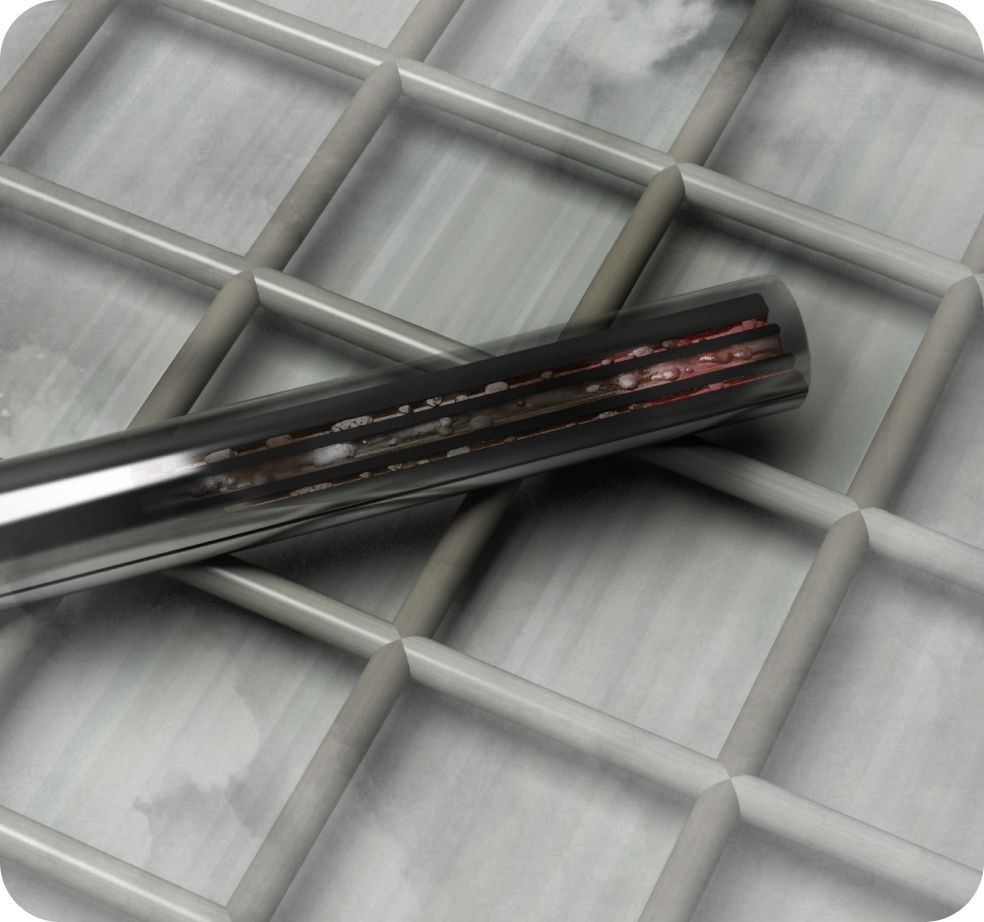
After metal air water syringe tips have been introduced with "suck-back" materials (blood, saliva, tissue), and after it is introduced to more biofilm and bacteria from other patients in the ultrasonic fluid, metal air water syringe tips are then placed inside an autoclave.
The standard autoclave uses heat and steam to sterilize the items placed inside. The problem is that the inside of metal air water syringe tips are not anodized. What this means is that the inside of the metal air water syringe tip corrodes each time it is put in the autoclave. As the corrosion continues, fissures begin to develop inside metal air water syringe tips. These fissures become pockets that collect biofilm, blood, tissue and other hazardous debris.
This collected debris begins to clog the tip. When metal air water syringe tips clog, the steam cannot penetrate all the way through these micro-lumens, causing a section of metal air water syringe tips to not get sterilized.

UNLUCKY PATIENT
After this process has been completed, an unlucky patient then gets treated with the ineffectively sterilized metal air water syringe tip.
There have even been cases where debris inside metal air water syringe tips break off and gets shot into the patients' mouth. Does that sound appealing to you? The sad thing is the average dentist, orthodontist, and hygienist know this, yet nothing is done to improve their infection control protocols and switch to disposable air water syringe tips.
Metal air water syringe tips are a difficult instrument to clean on the inside. The tip uses micro-lumens to deliver air, water, or air/water spray. The diameter of the micro-lumens is smaller than some hypodermic needles making them impossible to access. Dentists, orthodontists, and hygienists will notice that the performance characteristics of metal air water syringe tips degrade over time. The spray is visibly affected causing lower pressure, misdirected spray, and moisture problems while trying to deliver dry air during certain procedures.

NEW VS. OLD
Metal air water syringe tips begin to show signs of degradation after their very first use. As we discussed in the previous section of this page, metal air water syringe tips are impossible to clean.
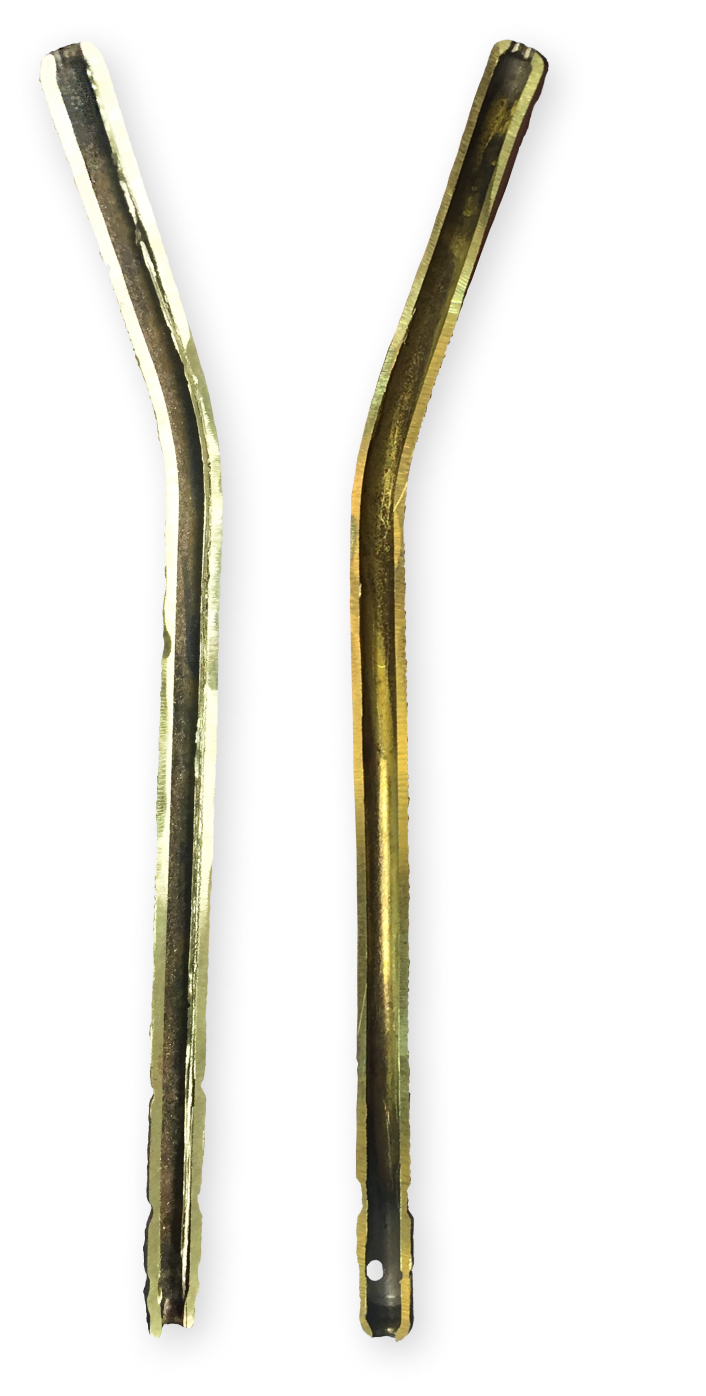
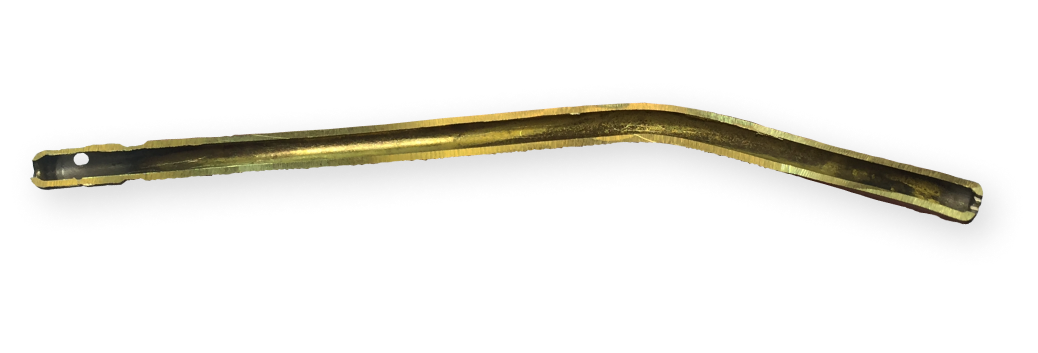
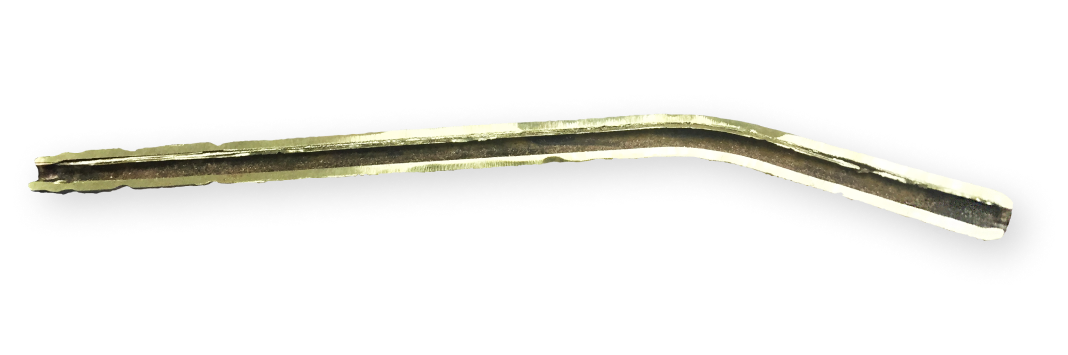
Normal wear and tear accompanied by corrosion makes these tips very dangerous and we want to show you exactly what happens. We will begin by showing you the outside of metal air water syringe tips followed by what the inside of used metal air water syringe tips really look like. In order to show you these pictures we took a cross-section of a brand new metal air water syringe tip and a used metal air water syringe tip (consistently used for a 2 month period in a standard dental office). After visual inspection, you will see proof that these tips undergo rapid change after consistent use.
Remember, most dental offices use metal air water syringe tips for years before throwing them away due to clogging issues.
OUTSIDE
 new
new
NEW AIR WATER SYRINGE TIPS
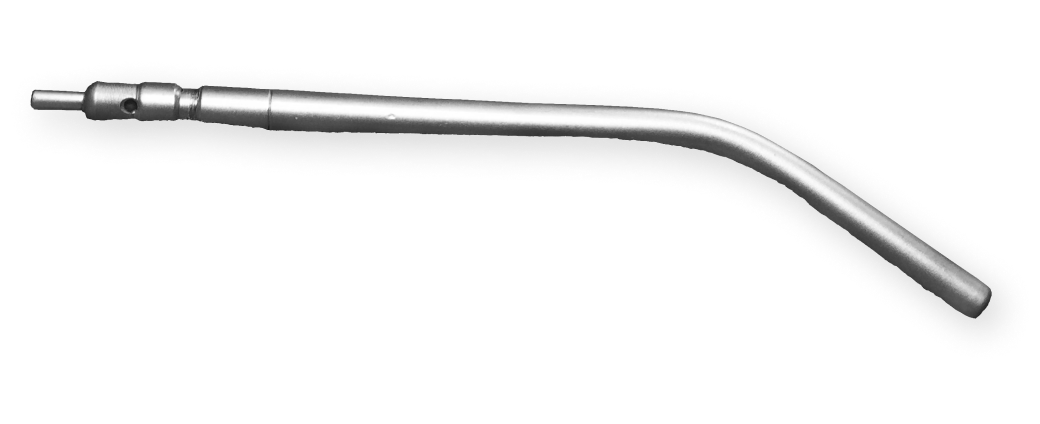
As you can see, new metal air water syringe tips start off looking very clean. The outside is polished with a consistent color all the way through. You can also see the surfaces are clean with no fissures and no degradation.
 old
old
OLD AIR WATER SYRINGE TIPS
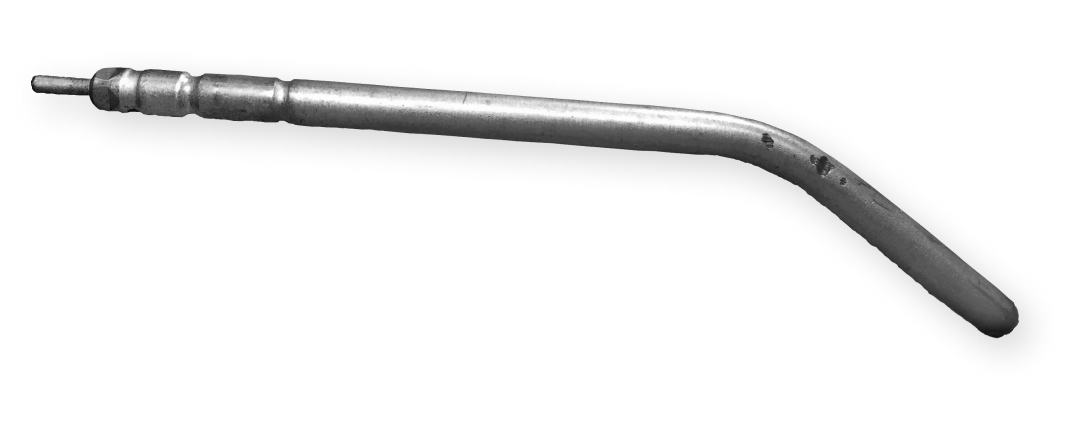
On the other hand, the used metal tip already shows major signs of wear and tear. Parts of the metal have already become chipped and discoloration has already begun to set in.
INSIDE
 new
new
NEW AIR WATER SYRINGE TIPS
As you can see, new metal air water syringe tips start off looking very clean. The outside is polished with a consistent color all the way through. You can also see the surfaces are clean with no fissures and no degradation.
 old
old
OLD AIR WATER SYRINGE TIPS
Used metal air water syringe tips look very dirty. As you can see, there is a lot of baked on debris and corrosion. The baked on debris is so thick you cannot visually see the surfaces of the metal air water syringe tip.
RESULTS
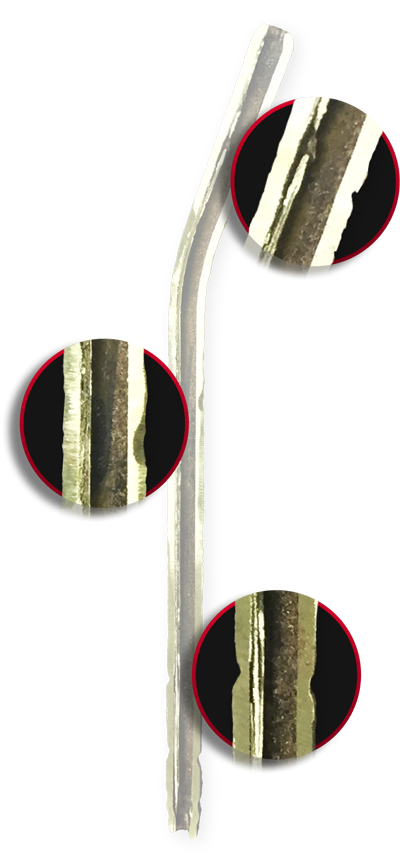
As you can see, used metal air water syringe tips are full of baked on debris. What once was a smooth clean surface is now full of bioburden.
The debris you see baked into this tip all stems from the sterilization process. The reflux effect sucks 1/4 in. of aerosolized blood, saliva, and debris from a patient back into the tip. The ultrasonic fluid then fills the micro-lumens of the metal air water syringe tip with contaminated bacteria. And finally, all that bacteria, blood, saliva, and tissue gets baked into the tip by the autoclave. The end result of this process can be seen in these photos.
The metal air water syringe tip we used for this comparison was only used for two months. Just think what it would look like after 6 months, a year, or 5 years. A dentist, orthodontist, and hygienist tend to use their tips till they are completely clogged with this bioburden. Does the used metal air water syringe tip look like the sterilization process is effective?
Would you want this tip used on you or your family? We didn't think so.

SCIENTIFIC STUDIES HAVE PROVEN
THERE IS NO EFFECTIVE
WAY TO STERILIZE
METAL AIR WATER SYRINGE TIPS
Scientific studies done by multiple groups have shown that even when metal air water syringe tips are put through multiple sterilization cycles (standard dental offices put metal air water syringe tips through 1 cycle), of the tips tested, 10% still contain live active bacteria.
Now 1% would be enough to consider the sterilization cycle ineffective. But 10% is a shocking number for any type of device used for treatments where blood, saliva, and tissue are interacting. Over 20 years ago, after discovering metal air water syringe tips could not be properly sterilized, disposable (single-use) air water syringe tips were created as a safer alternative. The creation of single-use tips were suppose to eliminate dentists, orthodontists, and hygienists from using metal air water syringe tips. This is still not the case.
Disposable air water syringe tips are single-use tips that would be used as a replacement product for metal air water syringe tips. The purpose of disposable air water syringe tips was to eliminate cross-contamination and to ensure one tip was used on one patient. Once a disposable tip is used, it is then thrown away and a new tip would be used on the next patient.
Once again, the advancement in scientific technology helped solve another safety hazard. WRONG! Dentists, orthodontists, and hygienists from around the world are still using metal air water syringe tips in record numbers.
To view recent studies, please click on any of the links below.

Baylor College of Dentistry

Rationale of using single-use disposable air/water syringe tips
Feb;21(2):176
read more
Quintessence International

The air-water syringe: contamination and disinfection
1989: 20; 912-916
read moreEJPRD

Effectiveness of Disposable (Single use) Tips for Dental Air-water Syringes
2023 1-8
read moreSwiss Dental Journal

Cost comparison of reusable and disposable air/water syringe tips in a large French teaching hospital.
2018 Jan.vol 128
read more
WHAT DO LEADING
HEALTH AUTHORITIES SAY?
Health authorities from around the world set many recommendations for sterilization processes, but when an item is difficult to clean,
single-use products should be used.

"Considerations in selecting cleaning
methods and equipment include:
1. Efficacy of the method, process, and equipment;
2. Compatibility with items to be cleaned;
3. Occupational health and exposure risk."
Centers for Disease Control and Prevention
DeKalb County, United States

Sometimes disposable patient-care items have reusable heat-tolerant alternatives. This is often true for prophylaxis angles, high-volume evacuator tips, impression trays, dental burs, and air and water syringe tips. In many instances, the reusable version of these items is hard to clean adequately, and it may be safer, easier, and more cost-efective to use the disposable version.
Centers for Disease Control and Prevention
DeKalb County, United States

Use single-use disposable items and equipment whenever possible. Consider difficult to clean as single-use disposables and discard after one use.
Centers for Disease Control and Prevention
DeKalb County, United States

"The danger of transmission of potentially pathogen ic bacteria through the use of hygienically inadequate or non-maintained additional devices is often underestimated in a dental practice.
The hygienic side of maintenance is impeded when cleaning and sterilization are difficult to be carried out due to material and construction related issues."
Robert Koch-Institut
Berlin, Germany

HTM 01-05: Where instruments are difficult to clean, consideration should be given to replacing them into single-use instruments where possible.
Department of Health
London, England
DISTORTED
RATIONALE
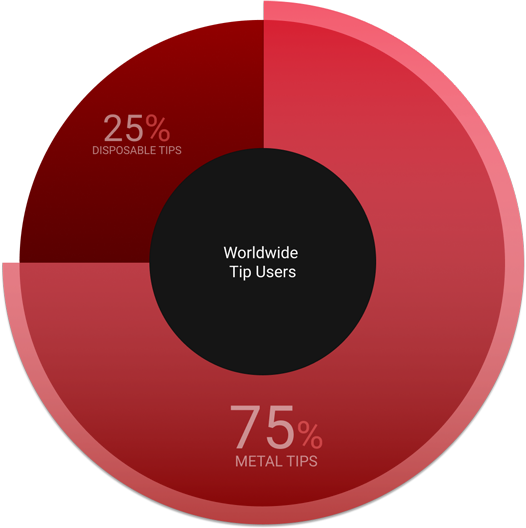
Over 75% of dentists, orthodontists, and hygienists from around the world still use metal air water syringe tips. Even though a dentist, orthodontist, and hygienist have learned through scientific journals and studies that this item could be a hazard to patient safety, they continue to use them.
For over 20 years, dentists, orthodontists, and hygienists have turned a blind eye to using disposable air water syringe tips for reasons that would shock you. If a dentist, orthodontist, and hygienist is morally turning their back to doing something that would ensure their patients would receive a safe treatment, they must have a good reason not to… right?
Here are common excuses a dentist, orthodontist, and hygienist fall back on when asked about their continued use of metal air water syringe tips.

Yes, Dentists, Orthodontists,
and Hygienists Have
Actually Said This.
Yes, Dentists, Orthodontists,
and Hygienists Have
Actually Said This.
Yes, Dentists, Orthodontists,
and Hygienists Have
Actually Said This.
Yes, Dentists, Orthodontists,
and Hygienists Have
Actually Said This.
Yes, Dentists, Orthodontists,
and Hygienists Have
Actually Said This.
Yes, Dentists, Orthodontists,
and Hygienists Have
Actually Said This.
Lets breakdown each excuse one-by-one.
Each excuse warrants some fears for the rationale a dentist, orthodontist, and hygienist is taking when deciding
to NOT purchase a product that would ensure patients receive a safe dental treatment.

"IT'S TOO EXPENSIVE"
Some dentists, orthodontists, and hygienists believe they are saving money by re-processing tips. This may seem true at first, but when you take a closer look it is not a simple case of buy them once and you’ll decrease your overhead.
When confronted, a hygienist will admit that tips are replaced much more frequently than you might think. Metal air water syringe tips disappear into the trash, sink, drain, and ultimately every one of them will need to be replaced due to clogging. A clogged tip means bad dentistry and outcomes that will be impacted negatively, along with the obvious sanitary aspects. The cost to replace metal air water tips can range from $5 to well over $500 depending upon the air water syringe type. The overriding factor is that the safety of the patient is far more important than possibly saving some pennies.
If a patient knew what could be lurking inside metal air water syringe tips, then there is little doubt that they would gladly pay the extra $0.25 to receive a single-use tip. But most patients don't know. And some dentists, orthodontists, and hygienists only have a vague awareness of what is going on inside the tip. Would a dentist, orthodontist, or hygienist place a visibly dirty dental instrument in front of the patient before starting treatment? No, they would not because the majority of patients would not accept.
Remember, it's what can't be seen on the inside of metal air water syringe tips that we're talking about. In some cases, metal air water syringe tips have been attached to the delivery system for 10 years or more without EVER being autoclaved.
"WHY CHANGE NOW?"
Usually this is a dentist, orthodontist, or hygienist that is stuck in their old ways. A few questions supplied will always shed some light on their misconceptions.
Back in the day, was it mandatory to wear gloves? Was it mandatory to wear a mask? No, these items were not mandatory, but as science and technology improved we learned that personal protective equipment was necessary to protect staff and patients from cross-contamination. The same goes for metal air water syringe tips.
New scientific studies have proven metal air water syringe tips are not safe, yet dentists, orthodontists, and hygienists continue to use them. As science and technologies improve, so do biofilms and viruses. New anti-biotic resistant viruses and biofilms mean we too need to create new ways of protecting ourselves. If metal air water syringe tips have been proven to have ineffective sterilization processes, doesn't it only seem right to upgrade to a safer solution?
We find it hard for a dentist, orthodontist, and hygienist to sustain their argument when proven science shows they are wrong.

"I CARE ABOUT
THE ENVIRONMENT"
The market for green products is still in it's infancy. Some dental offices claim they care about the environment, but when it comes to paying extra to get these products, all of a sudden their environmental stance seems to deteriorate.
Dentists, orthodontists, and hygienists claim they do not want to use disposable air water syringe tips because they have to throw away the tips after every patient. This in turn leads to an excess amount of waste that they feel is bad for the environment.
A dentist, orthodontist, and hygienist's number one priority should be the safety of their patient. Worrying about the environment as the forefront of their argument when they should be doing everything they can to protect their patients is a lapse in priorities. But at the same time, there are disposable air water syringe tips that are made from 100% compostable materials. These disposable air water syringe tips were created to help protect the environment while also protecting their patients.
As you can see, there are options for a dentist, orthodontist, and hygienist that are available, but again, it comes down to price. Currently a dentist, orthodontist, and hygienist will say they are all about "green" products until they see the price and fall back to their old ways. So again, there are options available for these dentists, orthodontists, and hygienist but they still choose to save a couple dollars over protecting their patients.
"I USE ORTHO WIRE"
This statement is usually said when they have no logical argument. An ortho wire is a very thin wire that some dentists and orthodontists say they have their staff use to clean a metal tip.
First off, how many dentists or orthodontists allow their hygienist to spend hours trying to physically scrape a wire through each micro-lumen of a metal air water syringe tip? Depending on the metal air water syringe tip, there could be 4-8 lumens to clean, all of which are smaller than a hypodermic needle. Imagine, after each patient, a hygienist spending valuable time sitting there scrapping through a metal air water syringe tip. Do you think an office would follow these practices after every patient? Also, everyone knows that if you can't see it, you can't clean it. We have previously discussed what happens inside of metal air water syringe tips. There is no possible way to see all the fissures and pockets where the bioburden builds up.
For arguments sake, let's assume metal air water syringe tips have been adequately sterilized. Is there a difference between sterile and sanitary? You could make a mud pie in your yard and bake it in the oven for an hour at 425 degrees thereby ensuring it is sterile. But would you want to place it on the dinner table to share with your guests? The accumulated cooked debris that has collected inside metal air water syringe tips can most definitely be dislodged into the mouth of the next patient. It is important to emphasize that it is incorrect to assume metal air water syringe tips are sterilized. The efficacy of a sterilization cycle is dependent upon many variables including the condensation of vapors on the interior walls of the syringe micro-lumens. The vapors first need to penetrate a barrier (pouch or wrap) and then enter the metal air water syringe tip through tiny holes. To achieve proper sterilization, the vapor needs to condense on the walls of the micro-lumens for a period of time. The problem is that what once started as a smooth surface inside metal air water syringe tips has over time become compromised with additional surface areas that are difficult to reach due to corrosion and debris deposits.

"FRIENDS AND FAMILY ONLY"
This argument is fundamentally wrong. When a dentist, orthodontist, or hygienist makes this statement, they are proving their belief that disposables are a safer alternative.
There are many offices that only carry a small supply of disposable air water syringe tips for specific purposes. These purposes include treatment of friends, family and high-risk patients. The rest of their patients are treated with metal air water syringe tips. How does that make you feel? If they are using these tips on loved ones and high-risk patients, why would they not choose to follow these same safety practices on you or your family? In their minds they've agreed that single-use air water syringe tips offer a higher level of safety, however, in practice they are violating your safety.
These actions also violate Universal Precautions. Universal Precautions as defined by the CDC and OSHA essentially states that all patients should be treated with the assumption that they are infected. The presumed infection could be mild like the flu virus or something much more serious. In fact, some of you reading this right now might be infected with something and not know it. Some people can be asymptomatic so they would have no reason to believe they are sick. There are other infected people that know they are carriers, but do not disclose their condition with healthcare providers.
On your next visit, please ask your dentist, orthodontist, or hygienist how he/she defines whose life is valuable enough for disposable air water syringe tips.
"I HAVEN'T KILLED ANYONE YET"
You would be surprised at the frequency in which this comment is made. Even saying this as a joke is not funny.
Infection control is a serious matter and a dentist, orthodontist, or hygienist that holds this opinion is not likely to be looking out for your best interest. If they hold this opinion of air water syringe tips, what other items do they also overlook as being a "non-issue"? For these types of dentists, orthodontists, and hygienists there are no studies, examples, or technologies that will sway them from their abrasive stance on infection control.
There have been many recent news stories that say the opposite to this argument. Patients are getting sick daily from dentists, orthodontists, and hygienists who do not follow safety protocols. The sad situation is that unless a disgruntled employee or patient raises concern, these stories are never brought to light. With the lack of mandated health inspections, a dentist, orthodontist, and hygienist are left on their own to determine their own safety protocols. Until dental offices are regularly inspected, there is no way to determine how safe a dental office really is.
If you visit a dentist, orthodontist, or hygienist who uses this argument...
RUN!

Safe Alternatives Are Available
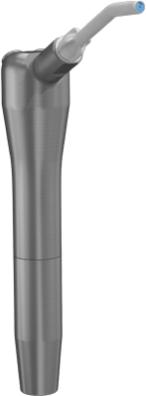
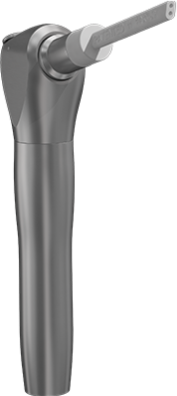
There is no reason for dental offices to continue using metal air water syringe tips. In today's market, there are hundreds of different single-use tip options available.

CrystalGenics
Air Water Syringe Tips
New technology, single use disposable
tip on an autoclavable air water syringe sleeve.

House Brand Tips
Air Water Syringe Tips
There a many brands that look similar to this style. Flash Tips, Sparkle Tips, many house brands.
For most syringes, no adapter required if switching from metal. If switching from another disposable, see manufacturers instructions for use.


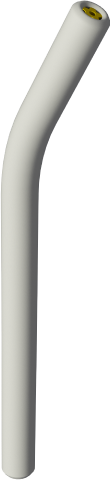
CrystalGenics, Pro-Tip, RisKontrol, Sani-Tip, and Seal-Tight are registered trademarks of their respective companies and are in no way associated with Dentistry's Dirty Secret or any of it's affiliates.
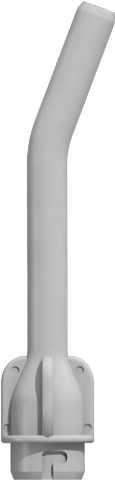
Single-use, air/water syringe tips come in all shapes, colors, and profiles.
There is no excuse to continue using metal tips when there are so many high-performing single-use tips on the market. Any one of the tips listed above would be a suitable option for an office to eliminate a major source of cross-contamination. All the excuses of why a dental office continues to use metal autoclavable tips do not warrant putting patient's health at risk. In today's dental office, there are NO excuses to continue using metal tips.


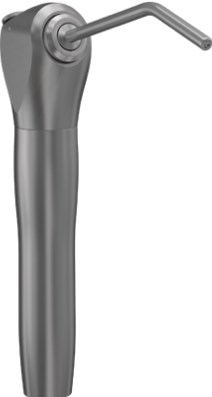 Before
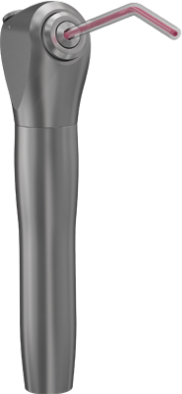 After
After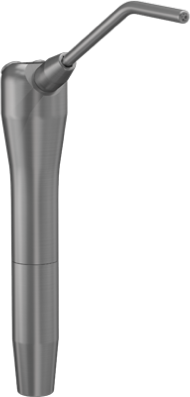 Before
 After
After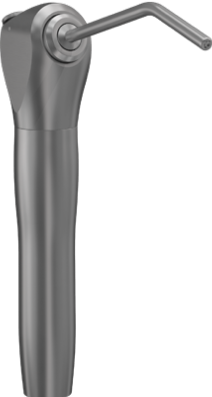 Before
 After
After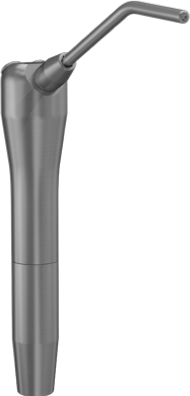 Before
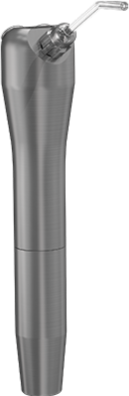 After
After Before
 After
After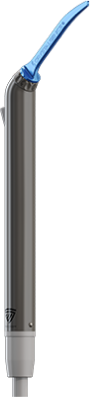 Before
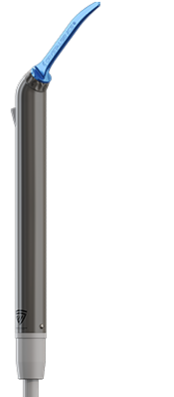 After
AfterIT'S TIME TO OPEN
YOUR EYES
The information and excuses you have just read should open your eyes when visiting a dental office. Just because the office looks clean, does not mean you cannot get sick or contract a deadly disease.
Metal air water syringe tips have been proven to not be safe. This is not someone saying that, this is science, technology, and research that have all proven this to be a fact. For over 20 years now, dentists, orthodontists, and hygienists have fought science and technology to switch from metal air water syringe tips to disposable tips based on the above arguments. At what point does this become a moral obligation for a dentist or orthodontist? If a dentist or orthodontist knows something is not safe, but does not inform his or her patients before treating them, that is breaking patient trust, informed consent, and a dentist/orthodontist's oath to provide a safe dental treatment.
We urge you as dental patients to observe and ask the right questions on your next dental visit. When it comes to the safety of you or your family, knowing the facts is half the battle. Being armed with this knowledge allows you to protect yourself when your dentist, orthodontist, or hygienist engages in bad infection control habits. We want everyone to receive a safe dental treatment and the only way this is possible is to allow you, the public, to become aware of things you were not privy to. Disposable air water syringe tips should be a requirement, not a choice. Dentists, orthodontists, and hygienists have plenty of options when selecting disposable air water syringe tips and the time of trying to save money over patient safety has to stop.
Explaining the facts is our main goal at Dentistry's Dirty Secret. Consumer advocacy along with aggressive education of dental professionals will help drive the change needed to ensure the highest level of sanitation.
Air water syringe tips are only part of the problem. The air water syringe, the device an air water tip is inserted into, also has many
fundamental infection control issues. You should also be aware of the infection control concerns that dental unit waterlines pose.