

CURRENT AIR WATER SYRINGE SYSTEMS ARE FLAWED
Why Can't a Dentist Just Remove Their Current Air Water Syringe?
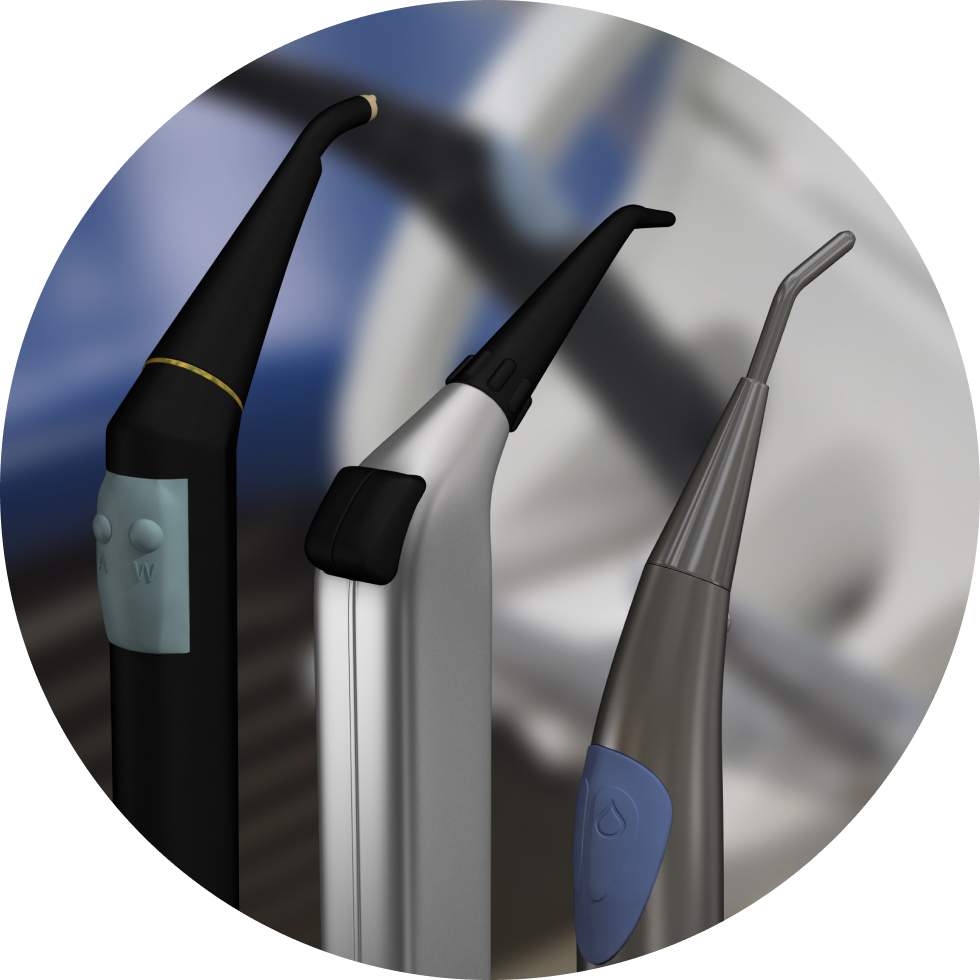
If a dental office were using one of the air water syringes that are shown in the beginning of this page, they would need to do the following steps after each patient's treatment.
- Turn off the dental chair power (located on the chair or main power box) depending on office setup.
- Unscrew the head of the air water syringe.
- Slide handle down from the head of the air water syringe.
- Use dental scissors to cut the air and water tubes from the head of the air water syringe.
- Use pliers to remove the plastic tubing stuck on the air and water barbs.
- Set aside the contaminated air water syringe.
- Have a sterilized air water syringe ready to install.
- Unscrew the head of the air water syringe.
- Insert the air and water tubes into the air water syringe handle.
- Connect the air and water tubes into the correct air and water barbs.
- Screw the air water syringe head into the air water syringe handle.
- Screw the air water syringe head into the air water syringe handle.
- Test to make sure air water syringe works properly.
- Begin next treatment.


Do you think this 14-step process is practical in a busy dental office?
The answer is no. A standard dental office is very busy. After one patient is treated the next patient is seen. The amount of time needed to implement this process would cost the office valuable treatment time and money, while limiting the number of patients they could see in a day.
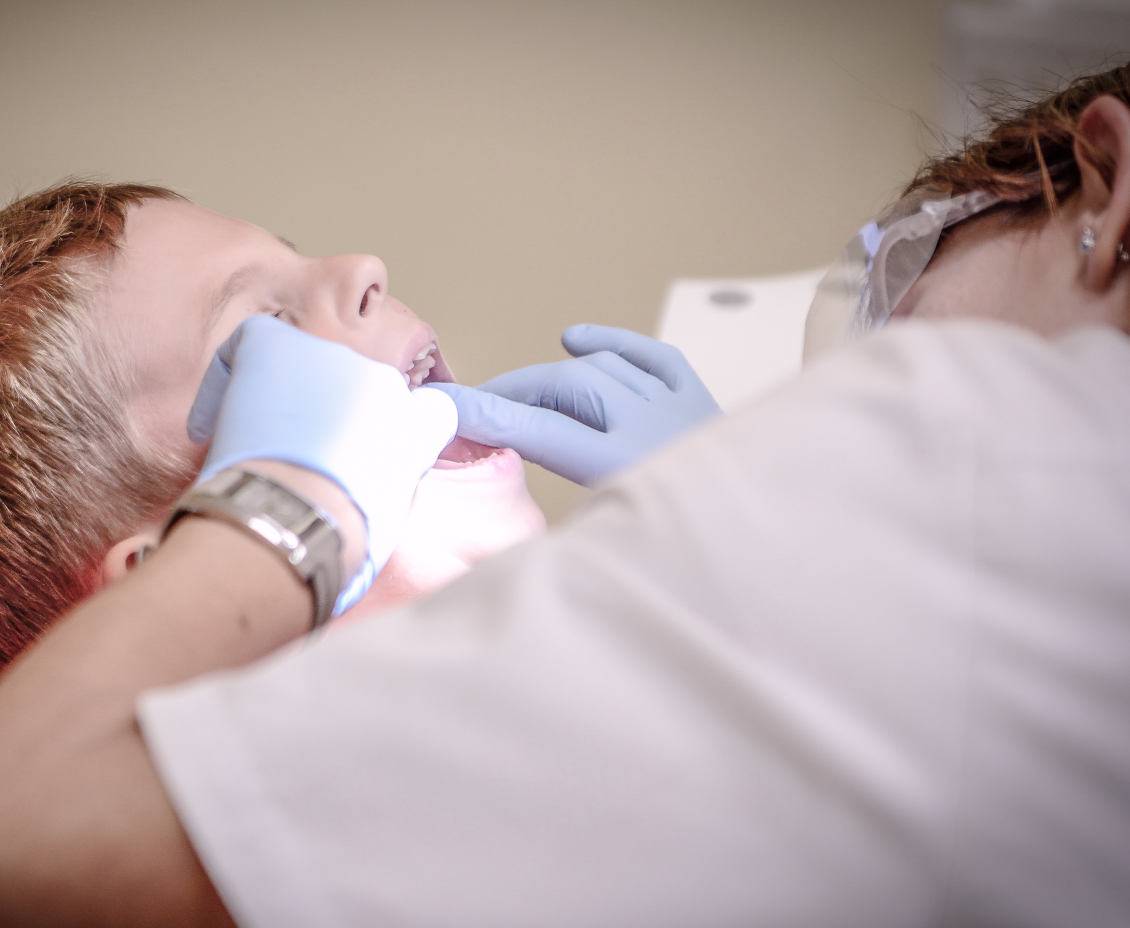
Do you think a dental office has enough replacement air water syringes to accommodate sterilizing their air water syringe between patients?
The answer is no. A standard air water syringe costs anywhere from $250 to $2500. Each surgery would need at least 10 spare air water syringes to make the sterilization process feasible. In reality, the majority of dental offices have zero spare air water syringes. With no spare air water syringes, there is no way an office can complete a sterilization process. Unless they wait hours between each patient, which is not practical, there is no way an office can claim their current air water syringe is sterilized.
Time, Cost, Transparency Challenges in Dental Sterilization and Safety
LACK OF TRANSPARENCY
Now lets go back a step. Some air water syringes have been designed to include a safety feature to remove the head of the air water syringe or the outer sleeve to be sterilized. The problem is, a dentist, orthodontist, and hygienist are not aware their device has this safety feature.
What good is a safety feature if the companies who make and sell the product do not teach or inform a dentist, orthodontist, or hygienist how to use it? On top of that, the items needed in order to make the safety feature viable are considered optional. This is when it becomes apparent why offices, even if they know their air water syringe has this safety feature, still do not do it. It costs money! In order to maintain a safe air water syringe, offices must have a minimum of ten replacement sleeves or heads to swap out between patients per surgery. The manufacturer is the person who in turn creates the issue by labeling items as optional with the distributor, who in turn makes the dentist, orthodontist, and hygienist feel these optional parts are unneeded in daily functions.
It's an industry problem that needs to be fixed immediately. If a part makes an air water syringe more safe, it should be standard, not optional.
OPTIONAL EQUIPMENT?
Lets give an example of how this sounds. You and your family go to a car dealership to buy a car. You find the car you like but it is a little too expensive. So to save money you ask the dealership to remove the airbags and seatbelts. This is optional equipment right?
Not if your life depended on it. Manufacturers have portrayed their safety add-ons as optional. What manufacturers should do is teach a dentist, orthodontist, and hygienist about the increased safety these parts can add to an air water syringe. A dentist, orthodontist, and hygieniest should also be informed on how it will help reduce risks and add more protection for their patients as well as their staff. But the disconnects created by manufacturers, dental distributors, and dental offices create a lack of understanding that is needed to safely sterilize an air water syringe. When items are deemed optional, offices in turn conceptualize these items as unneeded perks.
When it comes to the safety of you or your family, safety should not be optional, it should be standard.


WORKING WITH A BUDGET
Money in the majority of dental offices is very tight and a dentist, orthodontist and hygienist are trained to watch what they spend.
Due to restricted budgets, offices purchase only the necessities needed to perform their daily tasks and duties. Spending money on optional equipment that is not deemed to be a necessity is very rare. You would be surprised at what certain dental offices do to cut costs. There have been cases where a dentist, orthodontist, and hygienist reused latex gloves, reused disposable air water syringe tips, matrix bands, saliva ejectors, and many other items trying to cut their spending costs. These "shortcuts" create risky dental procedures that could end up harming patients. This risky behavior is caused by a dentist, orthodontist, and hygienist trying to work within a tight budget.
When offices are trying to cut costs, what other safety items are deemed unnecessary?
PUBLIC AWARENESS
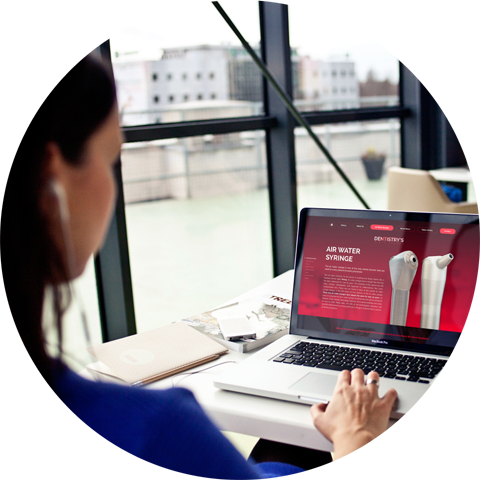
We at Dentistry's Dirty Secret are warning the public of this problem in order to raise awareness that the air water syringe contains grossly unreported risks.
These risks are not explained to patients, which breaks informed consent. There is no way as a patient you would know about these inherent risks and a dentist, orthodontist, and hygienist are not divulging this information as most of them are unaware as well. We are simply bridging the gap of information needed for you to become educated with the unknown risks when visiting a dental office.
The air water syringe is only part of the problem. Metal air water syringe tips, which are inserted into the air water syringe, have many infection controls issues as well. Ensuring that the dental unit waterlines are clear of biofilm and contamination also poses a major infection control concern.
Learn More About Metal Air Water Syringe Tips Learn More About Dental Unit Waterlines